


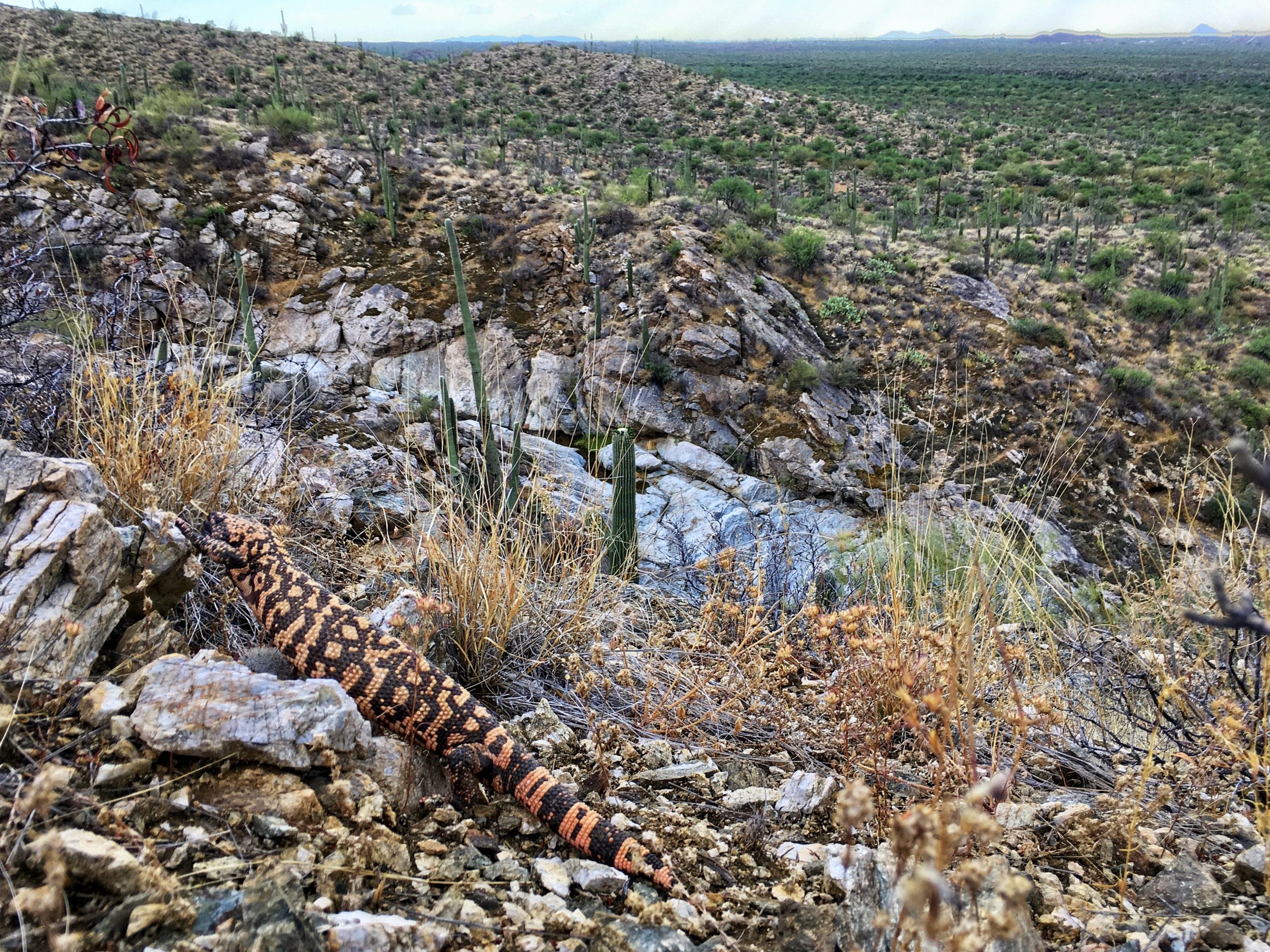


What is the Arizona Trail?
The Arizona National Scenic Trail stretches 800 miles across the entire length of the state to connect deserts, mountains, forests, canyons, wilderness, history, communities and people. This non-motorized trail showcases Arizona’s diverse vegetation, wildlife and scenery, as well as unique historic and cultural sites. The route provides unparalleled opportunities for hikers, mountain bikers, equestrians and other trail users.
Starting at the U.S.-Mexico border, the path climbs and descends from one “sky island” mountain range to another, gaining and losing thousands of feet in elevation and traversing biomes ranging from desert to boreal forest. Continuing across the Sonoran Desert, the route crosses the Gila River, winds through the Superstition Mountains and the Mazatzal Wilderness on its way to the Mogollon Rim and majestic San Francisco Peaks. The trail north takes travelers across the Grand Canyon through billions of years of geology. Topping out on the North Rim, conifer forests dominate the Kaibab Plateau, eventually giving way to red bluffs dotted with sagebrush as the trail nears the Utah border on the edge of the Vermilion Cliffs National Monument. It is the backbone of Arizona.
Whether you hike, run, pedal or ride, the adventure of a lifetime is waiting for you on the Arizona Trail.
History
The Arizona Trail was the dream of Dale Shewalter who envisioned a cross-state trail in the 1970s, and in 1985, while he was working as a Flagstaff schoolteacher, walked from Nogales to the Utah state line to explore the feasibility of a trail traversing Arizona.
Map of the Trail, a Story Map
Take a sky-high view of the entire 800-mile Arizona Trail as it runs from the Mexico to Utah borders. But you can also dive into all aspects of the trail with a tabbed interactive map to learn about the trail, its passages, mountain bike routes, Gateway Communities, water sources, photos from all over the trail, Arizona Trail Association Topo Maps, and the Arizona Trail App and much more linking back to this website.
Passages
The Arizona Trail is divided into 43 individual passages that stretch from the Mexico border to the south and the Utah border on the north. Find out specific information on each passage, including length, maps, profiles, tracks, waypoints, and stewards.
Trail Conditions Form
You can help keep the Arizona Trail in tip-top shape by letting us know its current conditions through an easy-to-use form.
Trail Stewards
Our stewards are volunteers who help maintain the entire Arizona Trail. You may contact specific stewards, or find out how to become a steward yourself!
Videos
A number of videographers have shot beautiful footage along the trail. View a selection of the best of the best and get a real feel for the beauty of the Arizona Trail.
Completion Award
Have you completed all 800 miles of the Arizona National Scenic Trail? If so, fill out our Completion Award form and as a “thank you,” we will add your name to our official finishers list. In addition, you’ll receive a finisher’s sticker and a copper-plated belt buckle or pin/pendant.
Trail Finishers
Here you will find a list of all who have completed the Arizona Trail – whether it was accomplished all at once or one segment at a time over many years.
